
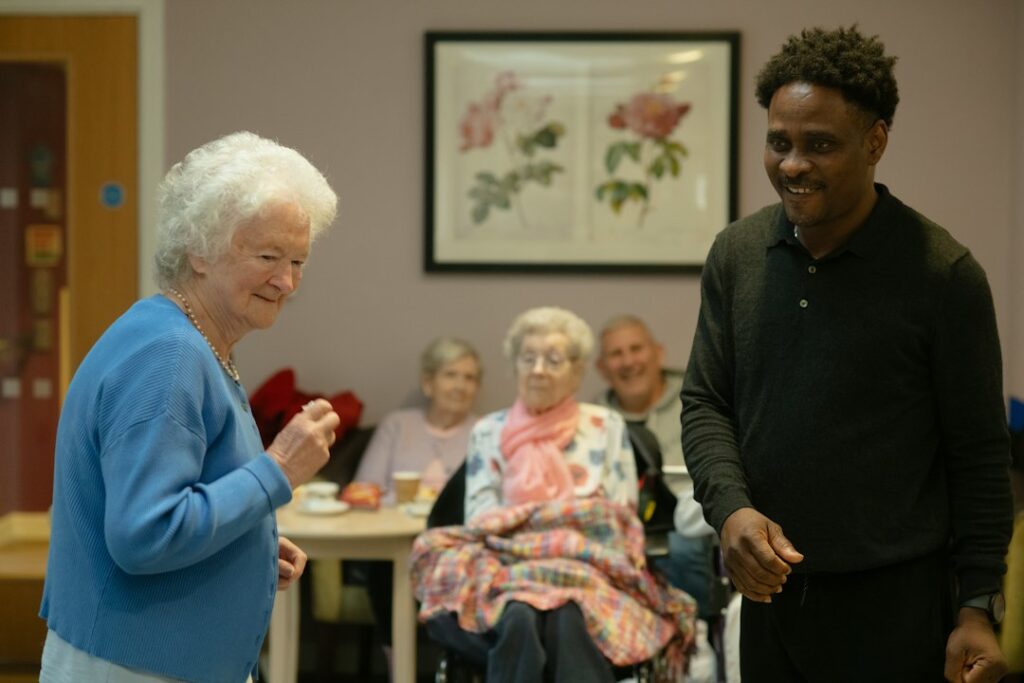
Healthy aging in assisted living is supported by steady daily habits rather than a single exercise, diet, or medical test. Residents in Easton, PA can often protect strength, balance, mood, memory, and independence by staying active in manageable ways, eating regularly, sleeping well, and speaking up when something changes.
How can assisted living residents stay physically active?
Short periods of movement throughout the day can be as useful as one long workout. Activity should match a resident’s abilities, health conditions, and care plan.
Helpful options may include:
- Walking in a hallway or shared indoor space
- Chair exercises, ankle movements, or gentle stretching
- Standing up and sitting down from a sturdy chair, if safe
- Light gardening, crafts, or household tasks
- Group movement classes approved for older adults
- Practicing balance exercises with staff supervision when needed
Residents who use walkers, canes, or wheelchairs can still exercise. The goal may be improving leg strength, flexibility, endurance, or safe transfers rather than walking without assistance.
A new exercise routine should be discussed with a healthcare professional when a resident has chest pain, repeated falls, severe shortness of breath, uncontrolled pain, dizziness, or a recent illness or hospitalization. Exercise should stop if unusual symptoms appear.
What foods support healthy aging?
Regular meals with enough protein, fiber, fluids, and key nutrients help maintain energy and muscle. Residents do not need a perfect diet, but they benefit from consistent nourishment.
Protein sources may include eggs, yogurt, beans, fish, poultry, tofu, or other foods suited to personal dietary needs. Fruits, vegetables, whole grains, and legumes provide fiber and nutrients that support digestion and heart health.
Some residents eat less because of reduced appetite, dental problems, swallowing concerns, medication effects, or changes in taste. Skipping meals can contribute to weakness and unplanned weight loss. Staff or a healthcare professional should be informed about:
- Ongoing poor appetite
- Clothing becoming noticeably looser
- Difficulty chewing or swallowing
- Repeated nausea, diarrhea, or constipation
- Sudden changes in food preferences
- Trouble opening packages or using utensils
Seasonal conditions can also affect eating and drinking. During warm, humid weather, residents may need reminders to drink fluids, especially if they have limited thirst or mobility. Fluid restrictions for heart, kidney, or other conditions should always be followed.
How much water should older adults drink?
There is no single daily amount that is right for everyone. Fluid needs depend on health conditions, medications, activity, weather, and medical instructions.
Practical hydration habits include drinking with meals, keeping an approved beverage nearby, and choosing foods with high water content when appropriate. Dark urine, dry mouth, constipation, unusual tiredness, confusion, or dizziness can be warning signs of dehydration, although these symptoms can have other causes.
Residents should not dramatically increase fluids without guidance if they have been given a fluid restriction. Staff should know about repeated difficulty drinking or frequent bathroom accidents that cause a resident to avoid fluids.
Why do sleep and daily routines matter?
A predictable routine can support sleep, mood, appetite, and memory. Many residents sleep better when they receive daylight during the morning, remain active during the day, and limit long late-afternoon naps.
Helpful sleep habits include:
- Keeping regular wake-up and bedtime hours
- Using comfortable lighting in the evening
- Limiting caffeine later in the day if it interferes with sleep
- Addressing pain, nighttime urination, or breathing problems
- Avoiding television or phone use if it makes falling asleep harder
- Asking about medication side effects that affect sleep
Poor sleep should not automatically be accepted as a normal part of aging. Persistent insomnia, loud snoring, gasping during sleep, frequent nightmares, or major daytime sleepiness deserves attention.
How can residents reduce fall risk?
Falls are more likely when several small risks occur at the same time. A resident may be affected by weak legs, poor vision, dizziness, unsafe footwear, clutter, medication effects, or rushing to the bathroom.
Residents can reduce risk by using prescribed mobility equipment, wearing secure shoes, keeping frequently used items within reach, and asking for help when feeling unsteady. Walkways should remain clear, especially near the bed, bathroom, and chair.
In older buildings or homes with changing seasonal conditions, wet floors, tracked-in water, poor lighting, and icy outdoor surfaces can create additional hazards. Residents should report these concerns rather than trying to manage hazardous areas alone.
A fall, near-fall, or new fear of falling should be reported even if there is no obvious injury. A near-fall may reveal a balance, medication, vision, or environmental problem that can be addressed before a more serious incident occurs.

What helps preserve memory and emotional well-being?
Mental activity and social connection are useful at every age. Activities should be meaningful, not merely distracting. Reading, music, conversation, puzzles, storytelling, faith practices, art, and learning a new skill can all provide mental stimulation.
Residents may benefit from choosing activities based on personal interests. Someone who dislikes organized games may prefer folding towels, listening to familiar music, writing letters, looking through photographs, or helping plan a shared event.
Loneliness and depression can appear as fatigue, irritability, withdrawal, loss of appetite, sleep changes, or reduced interest in favorite activities. These signs should not be dismissed as ordinary aging. A sudden change in behavior or thinking also deserves prompt attention, particularly if it develops over hours or days.
How should residents manage medications?
Taking medications exactly as directed helps prevent avoidable complications. Residents should keep an updated list of prescriptions, over-the-counter medicines, vitamins, and supplements, including the reason each is taken when known.
Questions worth raising include:
- Could this medicine cause dizziness or sleepiness?
- Could it affect appetite, balance, memory, or bowel movements?
- What should happen if a dose is missed?
- Are there medicines that should not be taken together?
- Is the medication still needed at the current dose?
Residents should not stop a prescription suddenly unless instructed to do so. New confusion, fainting, severe weakness, unusual bleeding, or a serious allergic reaction requires immediate attention according to the facility’s emergency procedures.
Which health changes should be reported promptly?
Small changes can sometimes signal a treatable problem. Residents should tell staff or a healthcare professional about new or worsening:
- Shortness of breath
- Chest discomfort
- Swelling in the legs
- Repeated dizziness
- Pain that limits normal activity
- Confusion or unusual sleepiness
- Changes in speech, strength, or facial movement
- Trouble swallowing
- Fever, persistent cough, or burning with urination
- Repeated falls or sudden difficulty walking
Fast changes in speech, facial movement, strength, breathing, or consciousness are emergencies. Residents and visitors should follow emergency procedures immediately rather than waiting to see whether symptoms improve.
Healthy aging in assisted living is not about doing everything independently. It is about maintaining abilities, recognizing changes early, accepting appropriate support, and taking part in decisions about daily health. A steady routine that includes movement, nourishing food, hydration, rest, safe surroundings, social connection, and clear communication can help residents remain engaged in community life through every season.
